



- If Vata is dominant in our system, we tend to be thin, light, enthusiastic, energetic, and changeable.
- If Pitta predominates in our nature, we tend to be intense, intelligent, and goal-oriented and we have a strong appetite for life.
- When Kapha prevails, we tend to be easy-going, methodical, and nurturing.
- Vata dosha, woven from the elements of Space and Air, regulates movement and change in our minds and bodies.
- Pitta dosha, comprised of Fire and Water, governs digestion and metabolism.
- Kapha dosha, made from Earth and Water, maintains and protects the integrity and structure of our mind and body.
- When Vata is balanced, a person is lively and creative, but when there is too much movement in the system, a person tends to experience anxiety, insomnia, dry skin, constipation and difficulty focusing.
- When Pitta is functioning in a balanced manner, a person is warm, friendly, disciplined, a good leader and a good speaker. When Pitta is out of balance, a person tends to be compulsive and irritable and may suffer from indigestion or an inflammatory condition.
- When Kapha is balanced, a person is sweet, supportive and stable, but when Kapha is out of balance, a person may experience sluggishness, weight gain and sinus congestion.

Want to know more about Ayurveda?
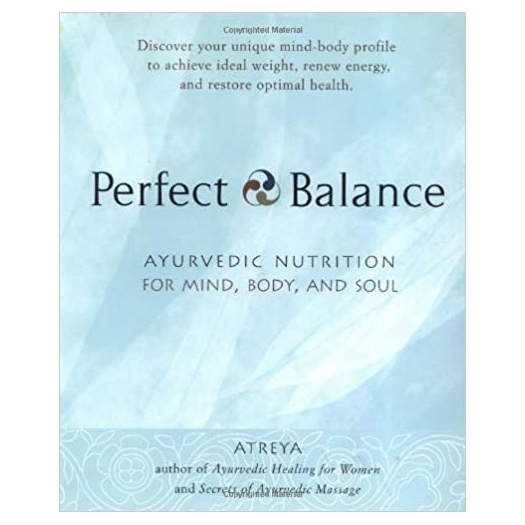
For anyone wanting to learn more, I couldn’t recommend the following books more. They contain a wealth of knowledge and will help you to determine your own dosha. I would recommend reading all of them, so that you really understand how to achieve balance through Ayurveda and can therefore adapt to any imbalances on a daily basis. The fourth book is, in my opinion, by far the best Ayurvedic cookbook available.



Ayurveda has been used for thousands of years to alleviate every type of health issue, including physical injuries. Ayurveda contrasts with the mechanical allopathic approach to medicine in that it looks at the whole person—mind, body, and spirit—but by including consciousness, it is not excluding the physical body. For virtually every physical ailment or injury, Ayurveda offers a healing protocol.
In contrast with conventional medicine, which has devoted a lot of effort to isolating the differences among various diseases, Ayurveda focuses on the unique qualities of individuals, pointing out that diseases differ mainly because people are so different.
Ayurveda teaches that all health-related measures — whether an exercise program, dietary plan or herbal supplement — must be based on an understanding of an individual’s unique mind-body constitution or dosha. By knowing a patient’s dosha, an Ayurvedic doctor can tell which diet, physical activities, and medical therapies are most likely to help, and which might do no good or even cause harm.
In addition, while Western medicine has tended to treat the symptoms of disease, Ayurveda seeks to eliminate illness by treating the underlying cause.
Ayurveda is a healing system that treats the whole person – the integration of body, mind, and spirit – rather than simply treating individual symptoms.